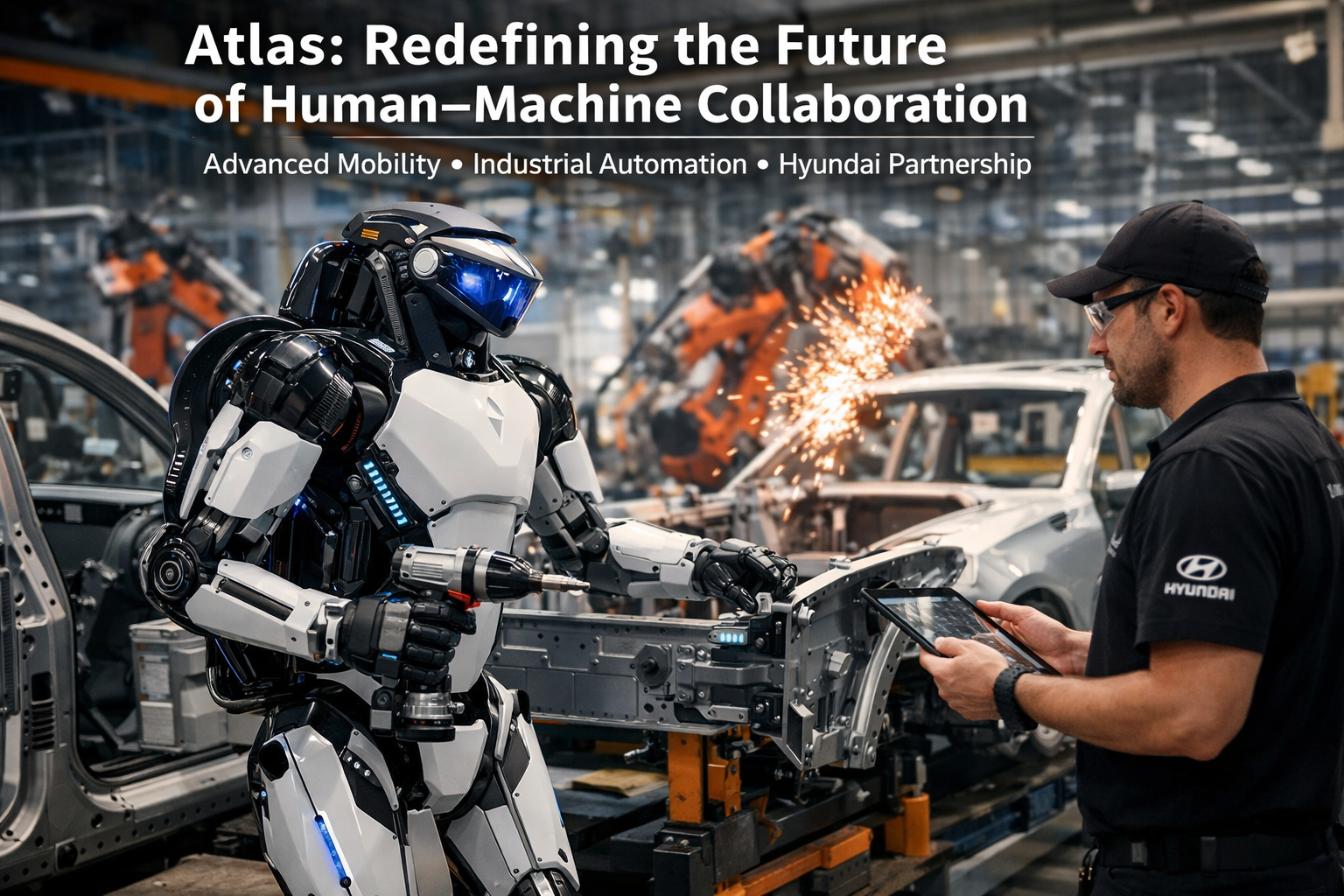
In the ever‑evolving world of robotics, few names spark as much excitement as Boston Dynamics. Known for their groundbreaking machines that walk, run, and leap with uncanny agility, the company has consistently pushed the boundaries of what robots can do. At the heart of this innovation stands the Atlas robot, a humanoid marvel that has become a symbol of the future of robotics. More than just a machine, Atlas represents a vision of how technology can seamlessly integrate into human life, reshaping industries, lifestyles, and even our imagination of what’s possible.
The Origins of Atlas
Atlas was first unveiled in 2013 as part of a U.S. Defense Advanced Research Projects Agency (DARPA) initiative. The goal was ambitious: create a humanoid robot capable of navigating complex environments and performing tasks that could assist humans in dangerous or inaccessible situations. Over the years, Boston Dynamics refined Atlas, transforming it from a bulky prototype into a sleek, agile machine that can run, jump, backflip, and even dance. Each iteration has showcased not only engineering brilliance but also a glimpse into the future of robotics as companions, workers, and performers.
Design and Capabilities
Standing at about 5 feet tall and weighing around 190 pounds, Atlas is designed to mimic human proportions. But what truly sets it apart is its mobility and dexterity. Unlike traditional robots that move stiffly, Atlas demonstrates fluid, dynamic motion. It can:
- Navigate uneven terrain with remarkable balance.
- Perform gymnastic routines, including flips and spins.
- Manipulate objects, opening doors or carrying packages.
- Recover from falls, adjusting its posture like a trained athlete.
These abilities are powered by advanced sensors, hydraulic actuators, and cutting‑edge control algorithms. Atlas doesn’t just move—it adapts, learns, and responds to its environment in ways that feel almost human.
Atlas in Everyday Life: Potential Applications
While Atlas is still primarily a research platform, its potential applications are vast. Imagine a future where humanoid robots like Atlas become part of everyday life:
- Emergency Response: Atlas could enter disaster zones, searching for survivors in collapsed buildings or delivering supplies in hazardous conditions.
- Industrial Work: Factories and warehouses could deploy Atlas to handle repetitive or dangerous tasks, reducing risks for human workers.
- Healthcare Assistance: With further refinement, Atlas could support elderly or disabled individuals, offering mobility aid or performing household chores.
- Entertainment and Education: Atlas’s ability to dance and perform routines hints at a future where robots become part of cultural events, performances, or interactive learning environments.
These scenarios highlight how Atlas could evolve from a research prototype into a lifestyle‑enhancing companion, blending utility with inspiration.
The Symbolism of Atlas
Beyond its technical prowess, Atlas carries symbolic weight. It represents humanity’s quest to create machines that mirror ourselves—not just in form, but in function. Watching Atlas perform a backflip or dance in sync with music evokes both awe and curiosity. It forces us to ask: What role should robots play in our lives? Are they tools, partners, or something more?
Atlas embodies the tension between fascination and caution. On one hand, it inspires visions of a future where robots enrich human life. On the other, it raises ethical questions about dependency, privacy, and the boundaries of human–machine interaction.
Challenges and Limitations
Despite its impressive abilities, Atlas is not yet ready for widespread consumer use. Several challenges remain:
- Cost: Atlas is an expensive research prototype, far from being affordable for households or businesses.
- Energy Efficiency: Its hydraulic systems consume significant power, limiting operational time.
- Safety Concerns: Deploying humanoid robots in public spaces requires rigorous safety protocols to prevent accidents.
- Ethical Considerations: Questions about job displacement, surveillance, and autonomy must be addressed before humanoid robots become mainstream.
Boston Dynamics acknowledges these challenges, positioning Atlas as a platform for exploration rather than immediate commercialization.
The Future of Atlas and Humanoid Robotics
Looking ahead, Atlas is likely to inspire new generations of humanoid robots that are lighter, more efficient, and more affordable. Advances in artificial intelligence, battery technology, and materials science will play crucial roles in this evolution. Imagine Atlas‑like robots assisting in hospitals, guiding tourists in cities, or even collaborating with humans in creative projects. The line between science fiction and reality is blurring, and Atlas is at the forefront of that transformation.
Lifestyle Impact: Why Atlas Matters
For lifestyle enthusiasts, Atlas is more than a machine—it’s a cultural icon. It represents how technology can expand human potential, offering glimpses of a future where robots are not just tools but companions. Whether it’s performing in a viral dance video or demonstrating agility in a lab, Atlas captures the imagination of millions worldwide. It reminds us that innovation is not just about utility—it’s about inspiration, creativity, and the joy of seeing the impossible become possible.
Conclusion
The Boston Dynamics Atlas robot is a testament to human ingenuity. From its origins in DARPA projects to its current role as a research platform, Atlas has redefined what we expect from humanoid machines. While challenges remain, its impact on technology, culture, and lifestyle is undeniable. Atlas is not just a robot—it’s a vision of the future, a symbol of possibility, and a reminder that the boundary between human and machine is becoming ever more fluid.
As we watch Atlas leap, spin, and dance, we are witnessing more than mechanical motion—we are witnessing the dawn of a new era in robotics. And in that era, robots like Atlas may very well become part of our daily lives, shaping the way we live, work, and dream.