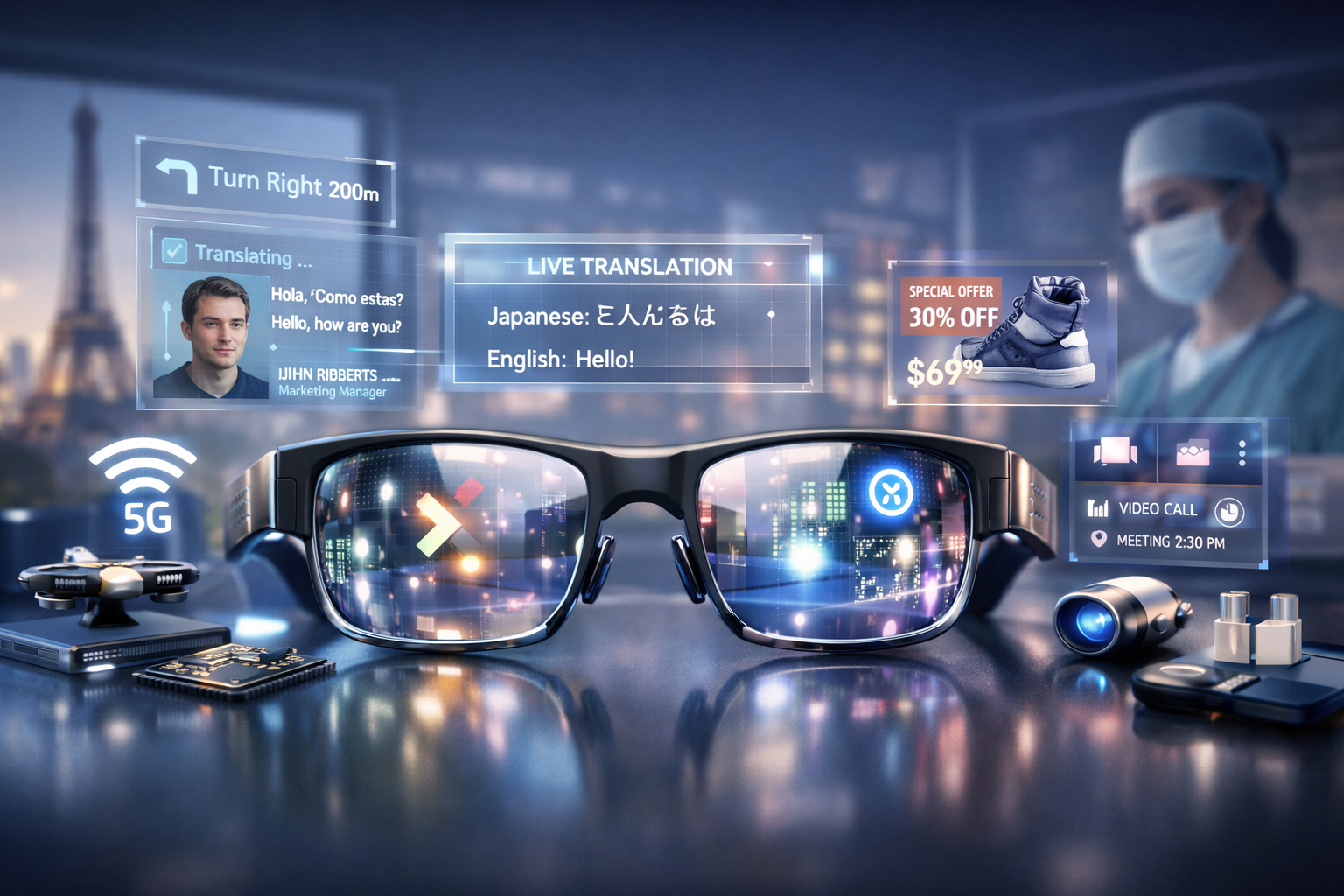
AI glasses are rapidly evolving into intelligent personal assistants, blending real-time data processing, augmented reality, and voice interaction to transform how we see and interact with the world. With global shipments expected to exceed 10 million units in 2025, they’re poised to revolutionize industries from healthcare to education and everyday life. housefull.online
👓 What Are AI Glasses?
AI glasses are wearable devices that combine traditional eyewear with artificial intelligence, sensors, and connectivity. Unlike basic smart glasses, AI glasses offer:
- Real-time translation
- Facial and object recognition
- Augmented reality overlays
- Voice-controlled assistants
- Navigation and contextual alerts
They’re designed to be lightweight, stylish, and intuitive—moving beyond the bulky prototypes of the past.
🔍 Key Technologies Behind AI Glasses
| Component | Functionality |
|---|---|
| Micro-displays | Project digital content into the user’s field of view |
| Waveguides | Direct light efficiently for AR overlays |
| AI processors | Handle real-time data analysis and decision-making |
| Sensors & Cameras | Capture environmental and biometric data |
| Connectivity (5G/Wi-Fi) | Enable cloud access and app integration |
These technologies allow AI glasses to deliver seamless, context-aware experiences.
🌐 Real-World Applications
1. Healthcare
- Doctors can view patient data during procedures.
- Visually impaired users gain navigation and object recognition support.
2. Education
- Students can access real-time translations and interactive learning overlays.
- Teachers can use AR to enhance classroom engagement.
3. Retail & Shopping
- Personalized product recommendations and price comparisons.
- Virtual try-ons and inventory tracking.
4. Travel & Navigation
- Turn-by-turn directions overlaid on the street view.
- Instant translation of signs and menus.
5. Workplace Productivity
- Hands-free access to manuals and instructions.
- Remote collaboration with visual annotations.
🚀 Future Trends
- Third-party app ecosystems: Developers will create custom experiences for niche markets MIT Technology Review.
- Integration with AI agents: Glasses will act as interfaces for personal AI assistants.
- AR dominance: Augmented reality glasses may surpass AI-only models by 2030 institute.bankofamerica.com.
- Privacy-first design: Expect better data protection and user control over recordings and analytics.
⚠️ Challenges to Overcome
- Battery life: High processing demands strain compact batteries.
- Privacy concerns: Facial recognition and constant recording raise ethical questions.
- Cost and accessibility: Advanced models remain expensive and niche.
- Social acceptance: Users may feel awkward wearing visible tech in public.
🧠 Final Thoughts
AI glasses are not just futuristic gadgets—they’re becoming essential tools for enhancing human capability. As they evolve, expect them to shift from novelty to necessity, especially in fields where real-time information and hands-free interaction are critical. Whether you’re navigating a foreign city, diagnosing a patient, or learning a new skill, AI glasses could soon be your most powerful companion.